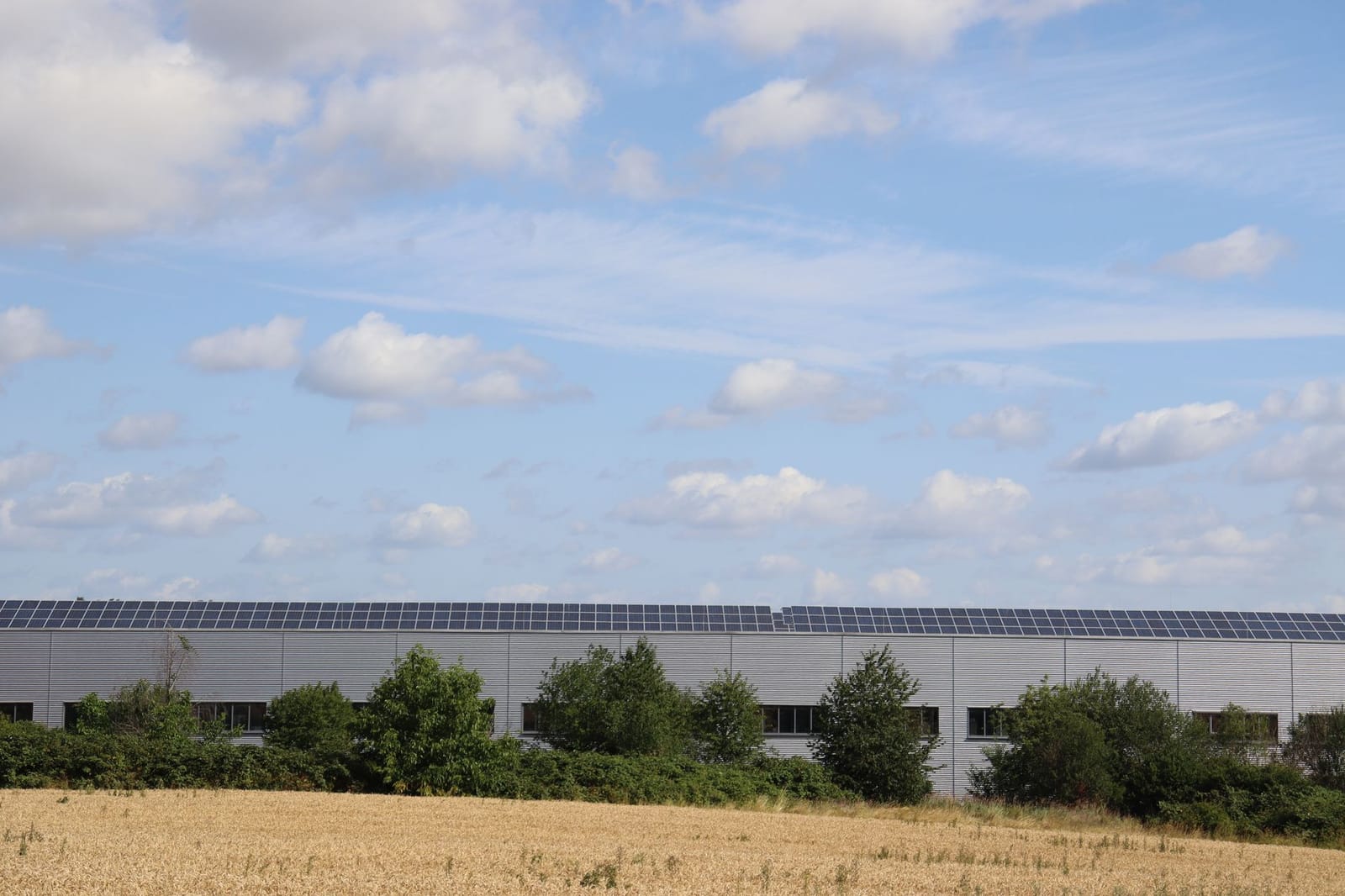
Warehouse and logistics solar is all we do
We are a specialist commercial solar operation focused on one building type: the warehouse. Not offices with a token array, not domestic rooftops, but the clear-span steel-portal sheds that make up the UK's distribution estate, and the 3PL, e-commerce fulfilment, ambient-storage, self-storage and bonded operators who run them. That focus is deliberate. A warehouse is a different solar problem to a factory or a shop, and the operators who win are the ones who work with people who understand their load, their lease and their roof.
The site is operated by SEO Dons Ltd, a company registered in England and Wales (company number 16766013), and every project is delivered with MCS-certified commercial installers. We are not tied to a single panel or inverter manufacturer, so the design follows your building and your numbers rather than whatever stock a salesperson needs to move this quarter.
Why we size to your load, not your roof
The single most common mistake in warehouse solar is filling the roof. A modern LED-lit ambient shed often has a surprisingly low daytime base-load, so a roof-full array over-generates and exports power at a few pence per unit while you keep buying at 25 to 45 pence. We start from twelve months of your half-hourly meter data and size the system to your actual daytime demand, typically 60 to 85 per cent of it, so you self-consume the generation instead of giving it away. Then we show you how forklift and materials-handling charging, and an EV-van fleet, can grow your daytime load into more of the roof over time.
Every proposal is built on a modelled yield, not a per-square-metre guess, and we share the assumptions. Where the numbers do not work, because a roof is near the end of its life, the daytime load is genuinely tiny, or the grid connection is a dead end, we tell you plainly rather than sell a system that will disappoint.
The questions other installers skip
Most of the value in a warehouse solar project is won or lost on the things a generic quote ignores. We lead with them: the landlord-and-tenant split incentive and the green-lease route for occupiers who do not own the roof; the LPC / RISCAuthority RC62 sprinkler clearances and insurer pre-design sign-off that keep your cover valid; the DNO connection reality on larger systems, where export limitation and high self-consumption often matter more than nameplate capacity; and the tax position, where the Annual Investment Allowance, business-rates exemption and Freeport allowances do the heavy lifting rather than any single grant.
Accreditations and warranty
Work is carried out to MCS commercial standards and by NICEIC-registered, RECC and TrustMark-licensed contractors, designed to BS 7671 and, on the structural side, to the Eurocode wind-loading standard BS EN 1991-1-4. Installations are covered by a 10-year IWA insurance-backed workmanship warranty on top of the manufacturer's 25-year panel-performance warranty. We work to the CDM 2015 construction regulations on every commercial site.
How to work with us
The first step is a free, desk-based feasibility study from your half-hourly data and roof drawings, with no site visit needed for the initial proposal. We return an indicative system size, generation forecast, cost and payback within seven working days, with the grid route and applicable allowances mapped out. Where the case stacks up, our engineers carry out a structural and electrical survey and issue a fixed-price proposal. Cash purchase, asset finance and a zero-capex PPA are all modelled side by side, with the IRR for each.